You made it through pregnancy. You brought a human into the world. And now everyone around you is focused on the baby — as they should be — while quietly assuming that you’re fine.
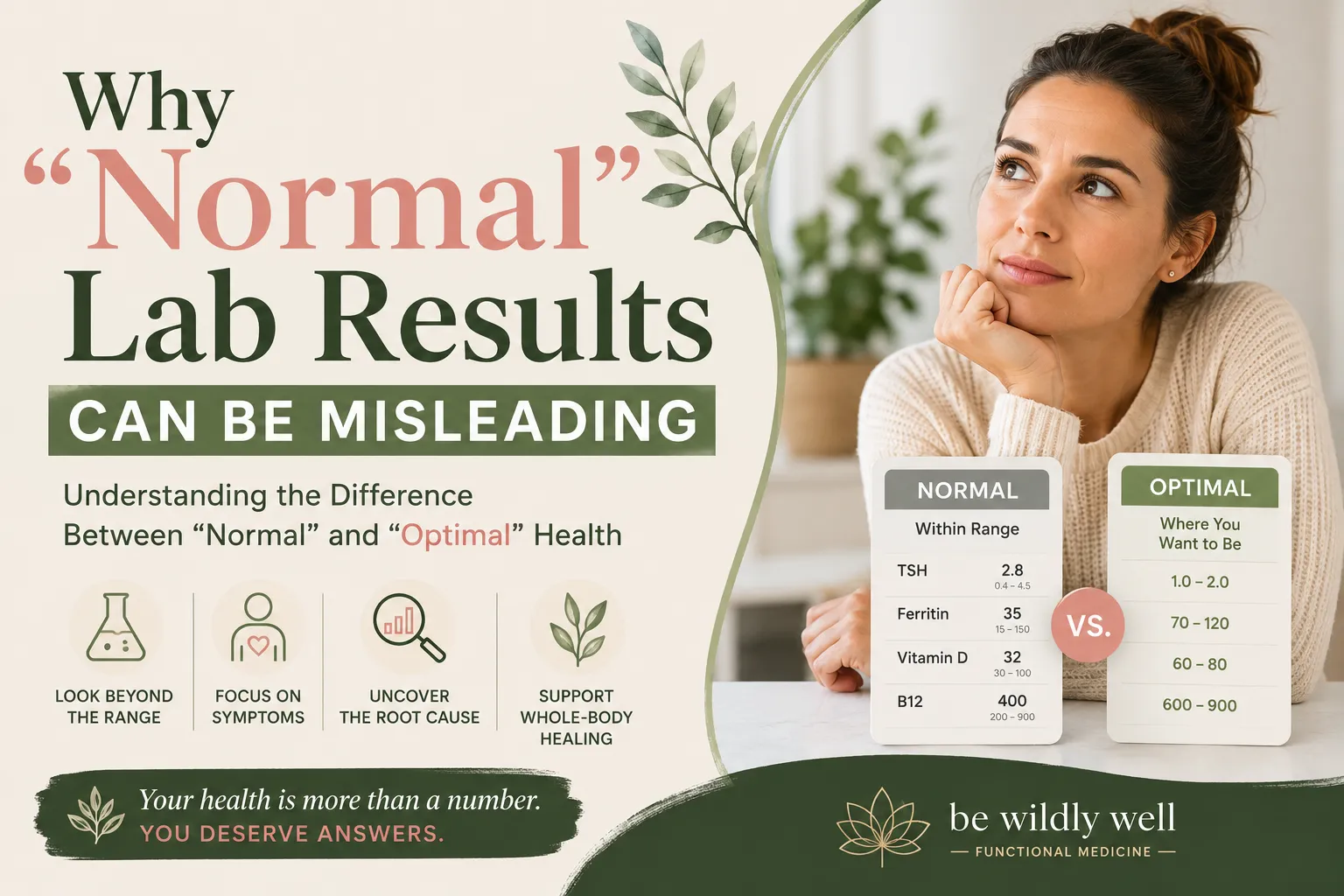
After all, you made it to your 6-week check. Your provider said everything looks good. Your labs came back “normal.”
But you don’t feel normal. You feel exhausted in a way that sleep doesn’t fix. Your hair is coming out in handfuls. Your mood feels like a weather system you can’t predict. Your brain is foggy. Your body doesn’t feel like yours.
Here’s what I want you to know: what you’re experiencing is real, it’s measurable, and it’s not something you just have to push through.
The postpartum period is one of the most nutritionally and hormonally demanding times in a woman’s life — and conventional medicine largely leaves mamas without the support they need to truly recover. In this post, I’m pulling back the curtain on the most overlooked postpartum deficiencies, why they matter, and exactly how functional medicine can help you get back to feeling wildly well.
Why Conventional Postpartum Care Falls Short
The standard postpartum model in the United States looks something like this: you deliver your baby, you’re discharged from the hospital within 24-48 hours, and you come back for a single appointment at 6 weeks. At that visit, your provider checks your incision or perineum, asks if you’re feeling sad, and clears you to return to exercise.
And that’s largely it.
There’s rarely a comprehensive nutrient panel. Rarely a full thyroid workup. Rarely a conversation about hormonal recovery, adrenal health, or what your body actually needs to rebuild after the physical marathon of pregnancy, labor, and delivery.
Functional medicine asks different questions. Instead of “are you okay enough,” we ask “how can we help you thrive?” Instead of a basic CBC, we look at ferritin, omega-3 index, RBC magnesium, vitamin D levels, and a full thyroid panel including antibodies. Instead of waiting for symptoms to become diagnosable conditions, we catch the imbalances early — when they’re still very correctable.
The Most Overlooked Postpartum Deficiencies
1. Iron (Ferritin)
Iron deficiency is the most common nutritional deficiency in postpartum women, and it is almost universally undertested. Here’s the problem: your standard blood count can look completely normal while your ferritin — the stored form of iron — is running dangerously low.
Ferritin is what your body draws from when you need iron quickly. When those stores are depleted, the symptoms are brutal: crushing fatigue that doesn’t respond to sleep, brain fog, shortness of breath, heart palpitations, poor milk supply, and low mood. Sound familiar?
Blood loss during delivery — especially after a C-section, hemorrhage, or long labor — can deplete iron stores significantly. Yet most postpartum moms are never tested beyond a basic hemoglobin check.
What functional medicine does differently: We check ferritin specifically, and we target an optimal level (not just the conventional “not anemic” range). We also use highly absorbable forms of iron like iron bisglycinate, which is significantly gentler on the gut than the standard ferrous sulfate.
2. Vitamin D
The majority of postpartum women are deficient in vitamin D, and this deficiency has far-reaching consequences that go well beyond bone health. Vitamin D functions more like a hormone than a vitamin — it regulates mood, immune function, thyroid health, and inflammation. Low vitamin D is strongly associated with postpartum depression, increased susceptibility to illness, and poor energy.
If you’re breastfeeding, your baby is entirely dependent on your vitamin D levels. The American Academy of Pediatrics recommends supplementing breastfed babies with vitamin D drops — but the root issue is almost always a deficient mother who has been depleted throughout pregnancy.
What functional medicine does differently: We check your actual 25-OH Vitamin D level and prescribe a therapeutic dose to get you into an optimal range (typically 60-80 ng/mL), not just the bare minimum. We also pair Vitamin D3 with K2 for proper calcium metabolism and cardiovascular safety.
3. Magnesium
Magnesium is involved in over 300 enzymatic reactions in your body, and it is quietly depleted by stress, poor sleep, breastfeeding, and the physical demands of new motherhood — which is to say, everything about the postpartum period drains your magnesium.
Signs of magnesium deficiency include anxiety, muscle cramps, poor sleep quality, constipation, headaches, and heart palpitations. Many of these symptoms are written off as “just being a new mom.” They’re not.
Magnesium is also deeply connected to cortisol regulation. When magnesium is low, stress hormones run higher. When stress hormones run higher, magnesium depletes faster. It’s a cycle that leaves mamas feeling wired, anxious, and exhausted all at once.
What functional medicine does differently: Standard blood magnesium tests are notoriously unreliable — only 1% of your body’s magnesium is in the blood. We check RBC (red blood cell) magnesium for a true picture of your stores, and we supplement with magnesium glycinate, the most bioavailable and calming form, typically at 200-400mg before bed.
4. Omega-3 Fatty Acids (DHA)
Your baby’s brain is made largely of DHA. Throughout pregnancy and especially during breastfeeding, your body prioritizes transferring DHA to your baby — which means your own brain is being depleted with every feeding.
This matters enormously because DHA deficiency is one of the strongest nutritional risk factors for postpartum depression and anxiety. Your brain literally needs fat to function, to regulate mood, to maintain the myelin sheath around your neurons. When those stores are gone, the neurological and emotional consequences are real.
What functional medicine does differently: We check your Omega-3 Index — a simple blood test that measures the percentage of EPA and DHA in your red blood cell membranes. An optimal index is above 8%. Most postpartum women are well below that. We then supplement with high-quality, third-party tested fish oil at therapeutic doses (typically 1,000-2,000mg DHA per day) until levels are restored.
5. B12 and Folate (Methylation Nutrients)
B12 and folate are essential for energy production, neurological function, mood regulation, and DNA repair. They are also the cornerstone nutrients for methylation — a critical biochemical process that affects how you detoxify, how you make neurotransmitters like serotonin and dopamine, and how your cells replicate and repair.
Postpartum women can be depleted in these nutrients for several reasons: increased demand during pregnancy, poor dietary intake, gut absorption issues, and — critically — genetic variants like MTHFR, which affect approximately 40% of the population and impair the ability to convert folate into its active form.
Signs of B12 and folate deficiency include fatigue, brain fog, depression, tingling in the hands and feet, and poor memory.
What functional medicine does differently: We check both B12 and folate levels, and we also screen for MTHFR variants. If a mutation is present, we prescribe methylated forms of these vitamins — methylcobalamin (B12) and methylfolate — that bypass the genetic block and are immediately usable by your body. Most standard prenatal vitamins contain folic acid, the synthetic form that women with MTHFR cannot properly convert.
6. Zinc
Zinc is essential for immune function, wound healing, hormone production, gut integrity, and mood — and it is significantly depleted through both pregnancy and breastfeeding. Low zinc is also closely linked to postpartum hair loss (telogen effluvium), which affects a large percentage of new moms around 3-6 months postpartum.
Zinc and copper exist in a careful balance in the body. Pregnancy naturally elevates copper, and if zinc doesn’t come back up postpartum, you can end up with a zinc-to-copper imbalance that contributes to anxiety, irritability, and poor immune resilience.
What functional medicine does differently: We assess both zinc and copper levels to evaluate the ratio, not just the individual numbers. Supplementing with zinc citrate or zinc bisglycinate, paired with copper if needed, supports immune recovery, hair regrowth, hormone balance, and gut healing.
7. Iodine
Iodine is essential for thyroid hormone production, and the thyroid is already under enormous pressure postpartum. Iodine requirements increase significantly during pregnancy and lactation, yet iodine is not routinely measured — and many prenatal vitamins either contain inadequate iodine or none at all.
Breastfeeding mothers need approximately 290 mcg of iodine per day to maintain their own thyroid function and provide adequate iodine to their infant through breast milk. Iodine is critical for a baby’s brain development, and deficiency during this window has lasting consequences.
What functional medicine does differently: We evaluate iodine status alongside a full thyroid panel, including TSH, Free T3, Free T4, Reverse T3, and thyroid antibodies (TPO and TgAb). We then support iodine repletion through food (seaweed, wild-caught fish, dairy) and targeted supplementation, always within therapeutic ranges.
8. Choline
Choline is perhaps the most underappreciated nutrient in the postpartum period. It is essential for brain function, liver health, and the production of acetylcholine — a neurotransmitter critical for memory and cognitive function. During breastfeeding, choline is transferred to your baby at high concentrations, directly impacting their neurological development.
Here’s the problem: most prenatal vitamins contain little to no choline, most women don’t eat enough choline-rich foods, and the nutrient is not routinely discussed or tested. The result is a population of postpartum moms experiencing “mom brain” that may be, in part, a choline deficiency.
What functional medicine does differently: We educate mamas on the best dietary sources of choline — eggs (especially the yolk), liver, salmon, and legumes — and supplement when needed. We also evaluate liver enzymes, as choline is essential for healthy fat metabolism in the liver.
The Thyroid: A Special Case
No conversation about postpartum deficiencies is complete without addressing the thyroid. Postpartum thyroiditis — an inflammation of the thyroid gland triggered by the immune system’s rebound after birth — affects up to 10% of postpartum women. It often goes completely undiagnosed because its symptoms (fatigue, mood changes, weight fluctuation, brain fog, hair loss) are assumed to be a normal part of new motherhood.
Postpartum thyroiditis typically occurs in two phases: a hyperthyroid phase (1-4 months postpartum) marked by anxiety, heart palpitations, and weight loss, followed by a hypothyroid phase (4-8 months) marked by fatigue, depression, cold intolerance, and weight gain. Most cases resolve within a year — but 20-30% of women develop permanent hypothyroidism.
A standard TSH test alone will miss many cases. A full functional thyroid panel — TSH, Free T3, Free T4, Reverse T3, and antibodies — is necessary to get the full picture.
What Feeling Like Your Best Self Can Actually Look Like
I want to paint a picture of what’s possible when we actually address these deficiencies and support the postpartum body the way it deserves.
It looks like waking up with enough energy to be present with your baby — not counting down the minutes until nap time out of desperation. It looks like a mood that feels stable, grounded, and like you — not like you’re living on the edge of overwhelm or tears. It looks like hair that stops falling out in alarming amounts. It looks like a body that feels like yours again — capable, strong, healing.
It looks like being wildly well.
These outcomes are not out of reach. They are what happens when we stop accepting “surviving” as the postpartum standard and start demanding something better.
How Wildly Well Supports Postpartum Mamas
At Wildly Well Functional Medicine, we take a root-cause approach to postpartum recovery. That means comprehensive lab testing that goes far beyond the standard panel — including ferritin, Vitamin D, RBC magnesium, omega-3 index, full thyroid panel, B12, folate, zinc, copper, and more.
From there, we build a personalized protocol for you — targeted supplementation at therapeutic doses, a nourishing food plan, hormonal support, and a timeline for how your healing should progress. We partner with you every step of the way, adjusting your plan as your body evolves through the postpartum season.
You don’t have to figure this out alone. And you don’t have to settle for feeling like a depleted version of yourself.
If you’re ready to get real answers and real support, I’d love to work with you!
📍 Minnesota-based | Telehealth available MN-WI-FL🌐 www.bewildlywellmn.com
This blog post is for educational purposes and does not constitute medical advice. Please work with a qualified healthcare provider for personalized recommendations.
Hannah Lewis MSN FNP-BC
Wildly Well Functional Medicine | bewildlywellmn.com